Context and goals
EvoSnake is an experimental browser game. It tests how a familiar control can stay engaging while rules and events change during play.
Role and responsibilities
I designed and built the game state, controls, responsive interface, visual feedback, and deployment.
Planning and implementation
The project separates predictable game state from presentation. Movement, collisions, special items, events, and leaderboard behavior can be reviewed and maintained separately.
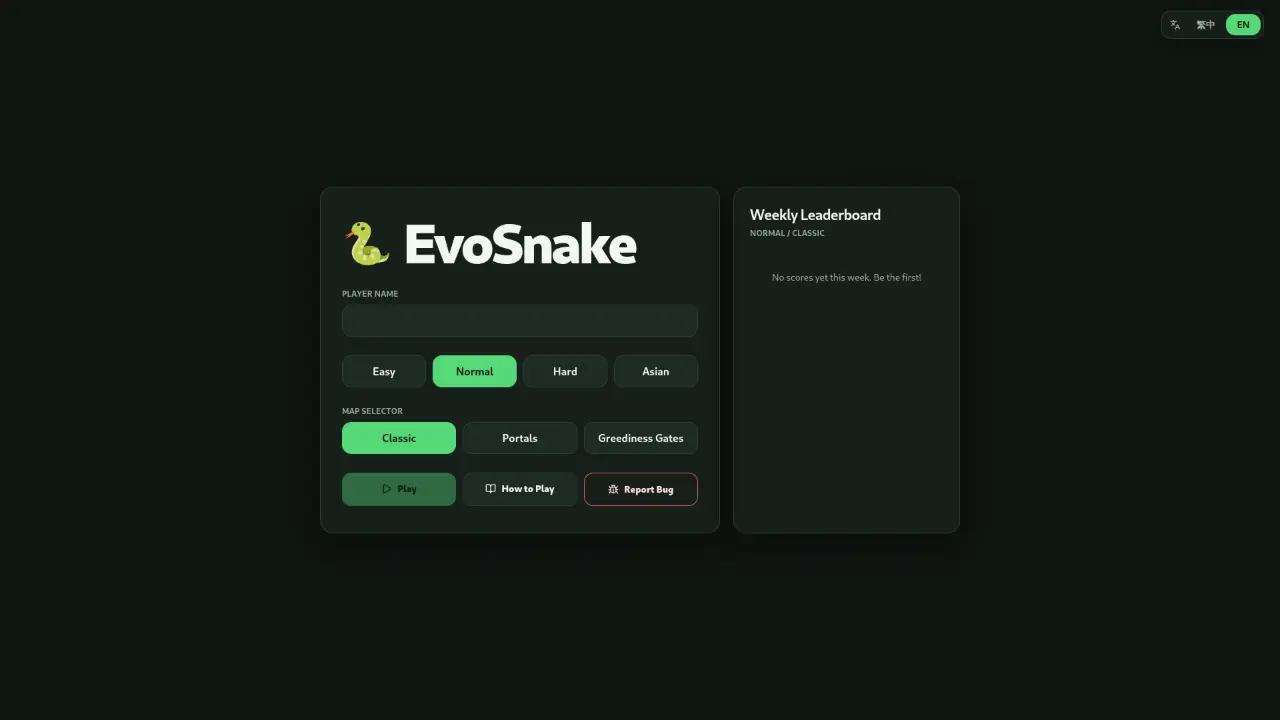
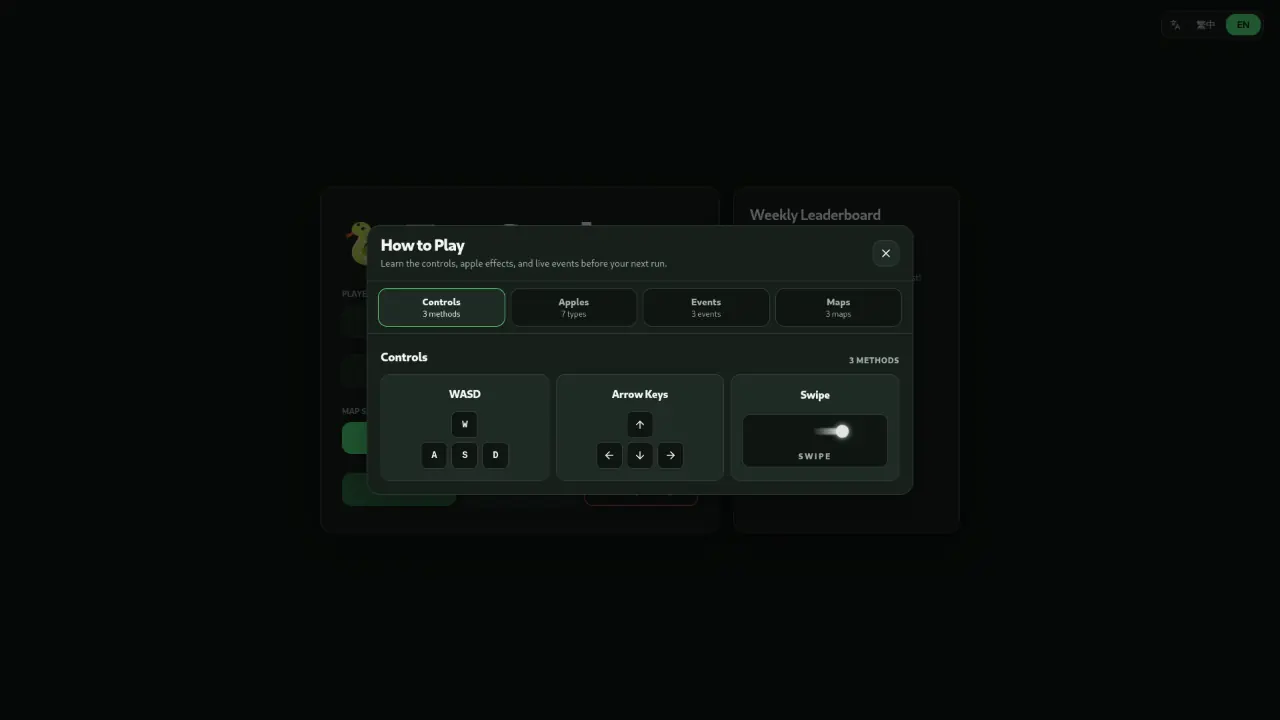
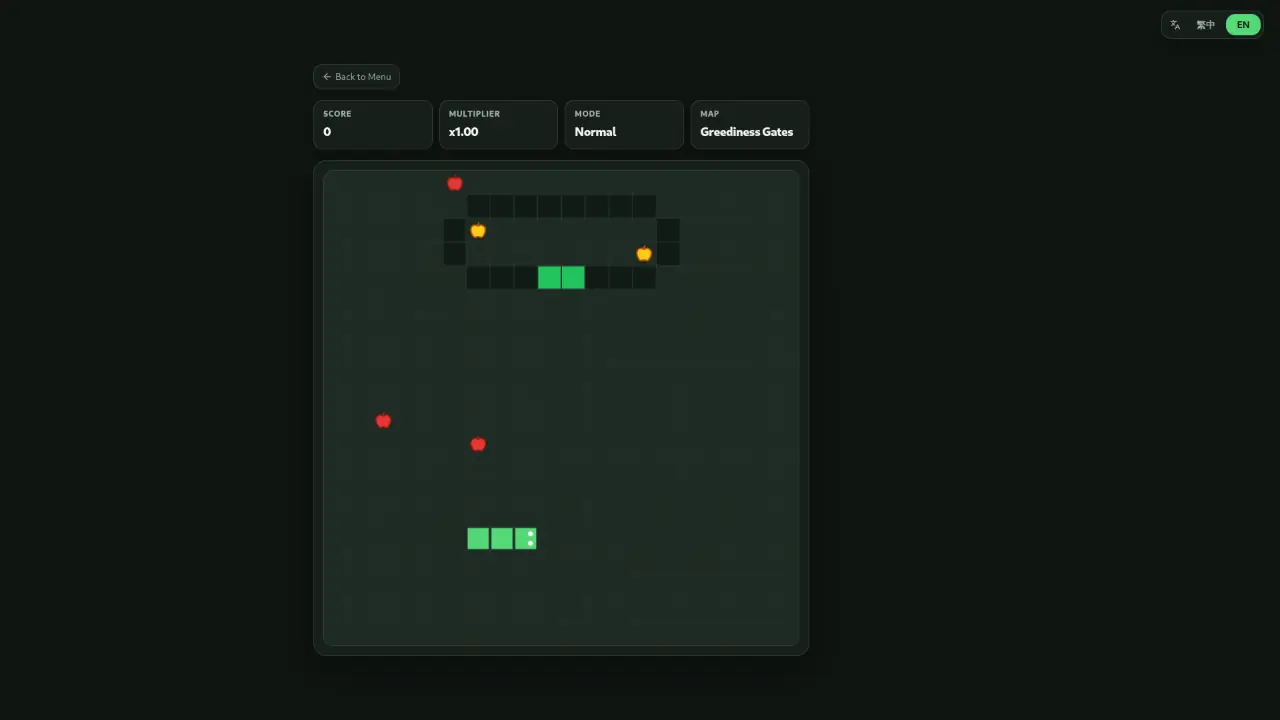
The visible flow includes setup and leaderboard state, an instructions dialog, and the active game board. These states require different information priorities: configuration before play, rules available without crowding the board, immediate feedback during play, and a result that can return the player to another attempt. Responsive behavior has to preserve both controls and feedback rather than merely shrink the desktop layout.
Fit, deliverables, and exclusions
EvoSnake is relevant to interaction-heavy frontend work where changing state, rules, dialogs, controls, and feedback must remain coherent. The delivered project covers state models, event rules, responsive interface behavior, visual feedback, leaderboard flow, and public deployment.
It is not a reference for authentication, sensitive account data, payments, server-authoritative competitive play, anti-cheat systems, or large-scale multiplayer coordination. It is also not presented as a commissioned client product. A business application could reuse the discipline of explicit state and failure handling, but would require different security and operational controls.
Technical decisions
- TypeScript models for game state and event rules
- Responsive controls and layouts for different screen sizes
- Clear feedback for scores, state changes, and failures
- Small focused components instead of a general game framework
A general engine was not introduced because the implemented mechanics can remain understandable through focused TypeScript models and UI components. This reduces abstraction overhead while keeping movement, events, and presentation separable enough to test and change.
Risks and review questions
Interaction projects can fail when input methods, timing, state transitions, pause and restart behavior, or small-screen controls are left implicit. A similar project should define supported devices, authoritative state, persistence, accessibility alternatives, failure recovery, and how rule changes are communicated before implementation grows.
The public repository and preview provide evidence of the implemented game loop and interface states. They do not establish player counts, retention, competitive fairness, accessibility certification, or commercial performance.
Verified result
The public repository and preview show the game loop and interaction system. The project is presented as experimental engineering, not a commercial product with unverified audience data.